Setting Up a Design System from scratch for a Saas App
Challenges
Lack of consistency: The absence of a unified design language led to inconsistency across the application, causing confusion among users.
Scalability issues: With the rapid expansion of features and functionalities, maintaining design coherence became increasingly challenging.
Collaboration barriers: Siloed workflows hindered effective collaboration between design, product and development teams, resulting in disjointed user experiences.
Objectives
Establish a unified design language: Develop a cohesive design system to ensure consistency and coherence across the application.
Streamline workflow: Facilitate seamless collaboration between design and development teams to accelerate the design and implementation process.
Enhance scalability: Create scalable design components and patterns to accommodate future growth and iterations.
Implementation
Research and Analysis: Worked with Product owners & Lead Designer and conducted a thorough analysis of existing design assets, user feedback, and industry best practices to inform the design system's framework.
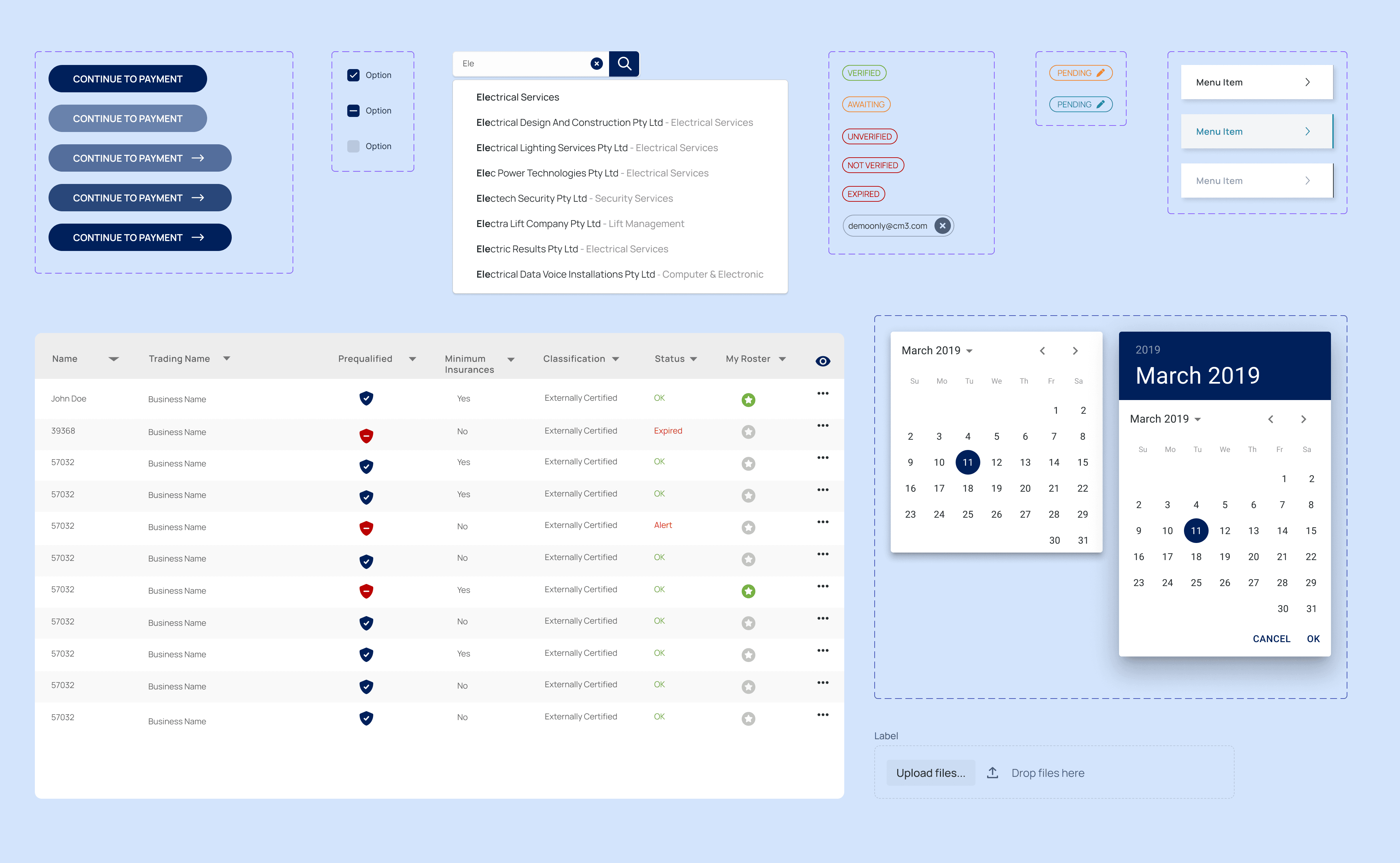
Design System Development: Developed a comprehensive design system comprising of typography, color palette, UI components, and interaction patterns.
Collaboration and Iteration: Fostered close collaboration between design and development teams through fortnightly feedback sessions and iteration cycles.
Implementation and Documentation: Integrated the design system into the development workflow and provided comprehensive documentation using tools e.g annotations within Figma, Confluence and Storybook to guide its usage.
Results
Consistency and Coherence: The implementation of the design system resulted in a significant improvement in design consistency and coherence across the application.
Efficiency and Productivity: Streamlined workflows and improved collaboration led to faster design iterations and implementation, enhancing overall productivity.
Scalability and Adaptability: The modular nature of the design system allowed for easy scalability and adaptability to accommodate future design iterations and feature enhancements.

Conclusion & next steps
The successful implementation of the design system has revolutionized our SaaS application's user experience, providing users with a cohesive and intuitive interface. By fostering collaboration, enhancing efficiency, and ensuring scalability, the design system has become a cornerstone of our product development process, driving continuous innovation and improvement.
Next Steps
Continued refinement and evolution of the design system to accommodate changing user needs and technological advancements.
Expansion of the design system to encompass additional product offerings and platforms, ensuring consistency across the entire product ecosystem.
Integration of user feedback and usability testing to further optimize the design system and enhance user satisfaction.